
Iraq Then: Reading Absence as Evidence – A Negative-Based Intelligence Perspective (Part 2 in the series on Intervention, Stability, and Structural Clarity)
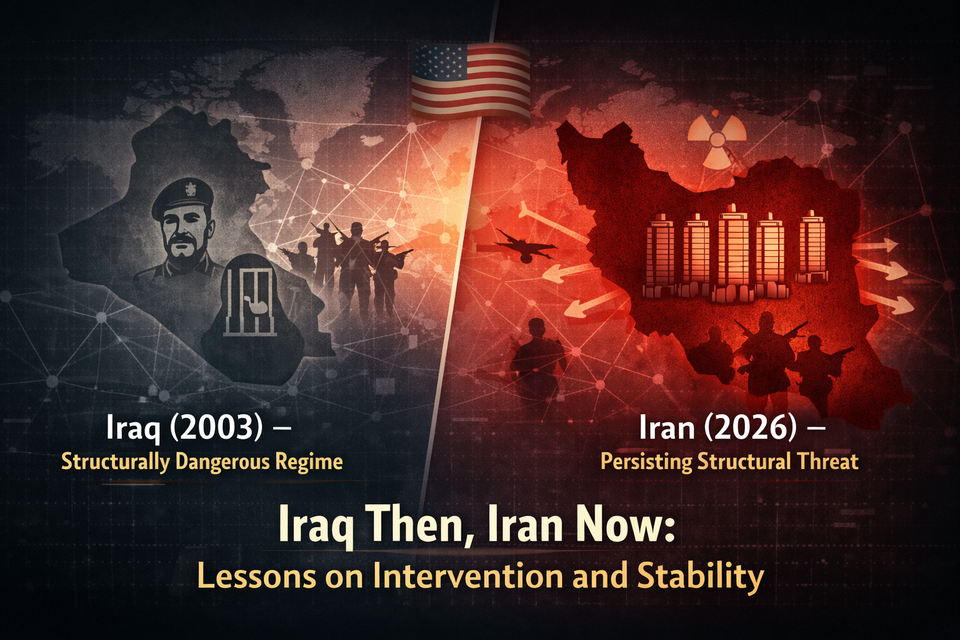
Survivors of sustained coercion learn early: presence can deceive, but absence speaks truth. What failed to reappear. What threat did not regenerate. What silence replaced constant alarm. This is not optimism. It is not denial of cost. It is pattern recognition trained by consequence. The dominant narrative on Iraq fixates on what was visible after 2003: insurgency, sectarian violence, displacement, militia rise, trillions spent, lives lost. These are real. They demand accounting. But they are only half the dataset. Negative-based intelligence asks the harder question: What should be here in 2026—but isn't? A Saddam-led regime rebuilding chemical stockpiles, testing delivery systems, or pursuing nuclear capability (as post-1991 intelligence repeatedly warned). Annual invasions or annexations of neighbors (Kuwait 1990 redux, or renewed aggression against Iran/Kurds). Centralized state payments to global suicide bombers, or systematic export of Ba'athist terror networks. A single, hyper-authoritarian command structure enforcing patriarchal terror nationwide: mass rape as weapon, forced disappearances of dissident women, honor-based killings codified in fear. None of these regenerated at structural scale. Their absence is not coincidence. It is outcome. Saddam's Iraq was engineered for reproduction of danger. Hyper-masculine control fused with state violence: women and girls erased from public life, dissent crushed preemptively, regional ambition fed by repression at home. Leave that system intact—as in 1991—and it rebuilds. Threats do not fade; they hibernate, then resurface stronger. Post-2003, the centralized engine was dismantled. What replaced it was fragmentation: militias, sectarian pulls, Iran-backed influence, ongoing fragility (over 1 million IDPs, humanitarian needs for millions, sporadic militia attacks on US forces amid regional tensions). Visibility of these problems creates the illusion of total failure. But survivors know: fragmentation is not the same as regeneration of a unified threat machine. The silence in global discourse about Iraq as an existential exporter of instability is data. No longer does Baghdad dominate threat assessments with WMD pursuits or cross-border armies. No longer does a single patriarchal autocrat dictate erasure of women at state level. That specific architecture of coercion—predictable, scalable, exportable—did not return. Women's rights illustrate this sharply. Under Saddam, patriarchy was weaponized centrally: honor crimes ignored or encouraged, political women disappeared, family law twisted to control. Post-2003, the terrain shifted unevenly. The 1959 Personal Status Law (progressive for its era) survived initial assaults; women's parliamentary quota reached 25-30%; activism surged in civil society. Yet conservative pushes persist—attempts to amend laws toward sectarian codes, rising unregistered/child marriages in instability pockets, militia influence limiting gains. These are visible struggles. But the negative space matters more: no centralized Ba'athist revival enforcing nationwide gender apartheid as state doctrine. No Saddam-era scale of state-sponsored domestic terror against women feeding external aggression. Absence of that fusion is structural progress, even amid backlash. Critics call this "rose-tinted" or "ignoring chaos." From protected vantage points, yes—absence reads as neutral. From exposure, it reads as calibration: the improbable non-recurrence of certain catastrophes is evidence. This is not defense of the invasion's execution (botched de-Ba'athification, inadequate planning, human cost unforgivable). It is refusal to treat structural success as invisible because it arrived through mess. For Iran today, the lesson sharpens: regimes fusing patriarchal clerical control with proxy export and nuclear threshold produce predictable outputs—repression at home, instability abroad. Leaving them intact allows regeneration. Decisive action against the engine (not personalities) can create absences worth measuring: threats that do not return, silences where alarms once rang. Negative-based intelligence does not celebrate cost. It accounts for patterns others miss. In Iraq, the pattern is clear: a chronic structural threat was interrupted. Women and girls paid dearly in the interruption—and still navigate fragility. But the specific patriarchal terror apparatus that once guaranteed their erasure at scale did not reboot. That absence is not illusion. It is data. And once seen, it changes what prevention demands.
Timeline: Reading Iraq Through Negative Space (1990–2026)
1990–1991: Gulf War & Unfinished Business Saddam invades/annexes Kuwait → centralized aggression regenerates post-Iran-Iraq War. Coalition defeats Iraq but leaves regime intact → absence of decisive removal allows threat engine to persist. No-fly zones & sanctions imposed, but Saddam rebuilds capabilities quietly. Negative signal for women/girls: Hyper-masculine state terror continues (honor crimes encouraged, dissenters disappeared).
1990s–Early 2000s: Chronic Threat Regeneration Saddam pursues WMD programs (chemical, biological, nuclear ambitions flagged repeatedly). Payments to Palestinian suicide bombers → export of terror normalized. Centralized patriarchal control: women/girls erased via fear, family law twisted for coercion. Absence absent: Threats hibernate then resurface (e.g., defiance of UN inspections, interference).
March 2003: Invasion & Regime Dismantling Saddam toppled; centralized Ba'athist engine dismantled. Sons Uday/Qusay killed (June 2003); Saddam captured (Dec 2003), executed (2006). Immediate visible chaos: Insurgency, sectarian violence surge. Negative space begins: No unified regime rebuilds WMDs or launches invasions.
2004–2011: Peak Instability & Surge Insurgency/AQI peaks; sectarian civil war risks (2006–2007). Surge (2007) + Sons of Iraq → violence drops sharply. US combat ops end (2011); full withdrawal. Absences emerge: No Saddam-led cross-border aggression; no centralized state payments to global terrorists; no single autocrat enforcing nationwide gender terror at scale.
2014–2017: ISIS Rise & Defeat ISIS exploits vacuum → territorial caliphate. Coalition + Iraqi forces reclaim Mosul (2017). Negative intelligence key: ISIS not Saddam regeneration—decentralized jihadist, not hyper-masculine Ba'athist state exporter. Centralized threat machine stays dismantled.
2018–2025: Fragility Without Regeneration Iran-backed militias embed (PMF integration); sporadic attacks on US forces. Elections routine; power transfers occur.
2025 Personal Status Law amendment → setbacks (sect-based family codes, risks to equality, child marriage exceptions persist). Absences hold: No Ba'athist revival enforcing hyper-patriarchal doctrine nationwide; no regime pursuing nuclear threshold or invading neighbors. Women's activism surges in civil society; parliamentary quota (25–30%) survives; no centralized state-sponsored erasure machine reboots.
2026 (Current): Silence as Data US completes withdrawal from federal territory (Jan 2026; residual in Kurdistan). 1M+ IDPs; 3M need aid; militia influence persists amid regional tensions (Israel-Hamas fallout, Syria post-Assad). Core absences: No Saddam-style invasions or WMD pursuits regenerating. No centralized patriarchal terror exporting instability regionally. No unified regime guaranteeing women's/girls' erasure at state scale (though sectarian pushes & militia limits persist).
Calibration point: Fragmentation & fragility visible; but chronic structural threat (predictable aggression from patriarchal coercion) absent. Silence where constant crisis once screamed is evidence—not neutrality. This timeline isn't about declaring "success" amid human cost—it's about pattern recognition: the improbable non-return of certain catastrophes is data from exposure.
Pre-2003, threats regenerated predictably; post-2003, the centralized engine broke, creating space (messy, contested) where women/girls face new struggles but not the same scalable, state-enforced doom.
Member discussion