
🚨 When Helpers Turn Cold: The Hidden Violence of Abandonment
There’s a moment so many victims and survivors know all too well: when someone who’s supposed to help—a police officer, social worker, nurse—seems connected, present, even caring. They’re listening. They’re nodding. They’re there.
And then suddenly, it’s like a cord is cut. The warmth disappears. The engagement drains from their eyes. They retreat, emotionally or physically. They brush you off with, “That’s not my department,” “That’s a civil matter,” or “There’s nothing I can do.” And you’re left alone, spinning in the cold, wondering if you imagined the brief glimpse of compassion.
It’s not just disorienting—it’s devastating. Because each time, you dared to hope. And each time, being dropped confirms the crushing lesson: the system doesn’t see you, or worse, sees you and chooses to turn away.
This cycle of connection and abrupt disconnection is itself a form of harm. It deepens the trauma. It teaches victims not to trust, not to reach out again.
And it’s not just my experience:
ER Triage Shift: A woman who arrived at an ER after an assault described a nurse who was warm and attentive—until they realized she was unhoused. Then, the nurse grew curt, avoided eye contact, and prioritized other patients, leaving her untreated for hours.
DV Shelter Intake: Another survivor shared how the intake counselor at a domestic violence shelter seemed supportive, offered tea, and asked detailed questions—but after a quick phone call “up the chain,” shifted to saying there was no space and suggested a distant, unsafe shelter instead.
Police Interview: A third woman recounted how an officer began their conversation saying, “We’re going to get you help,” took a detailed statement, then went silent when she mentioned the abuser’s influential job—ending the interview abruptly and later refusing to return her calls.
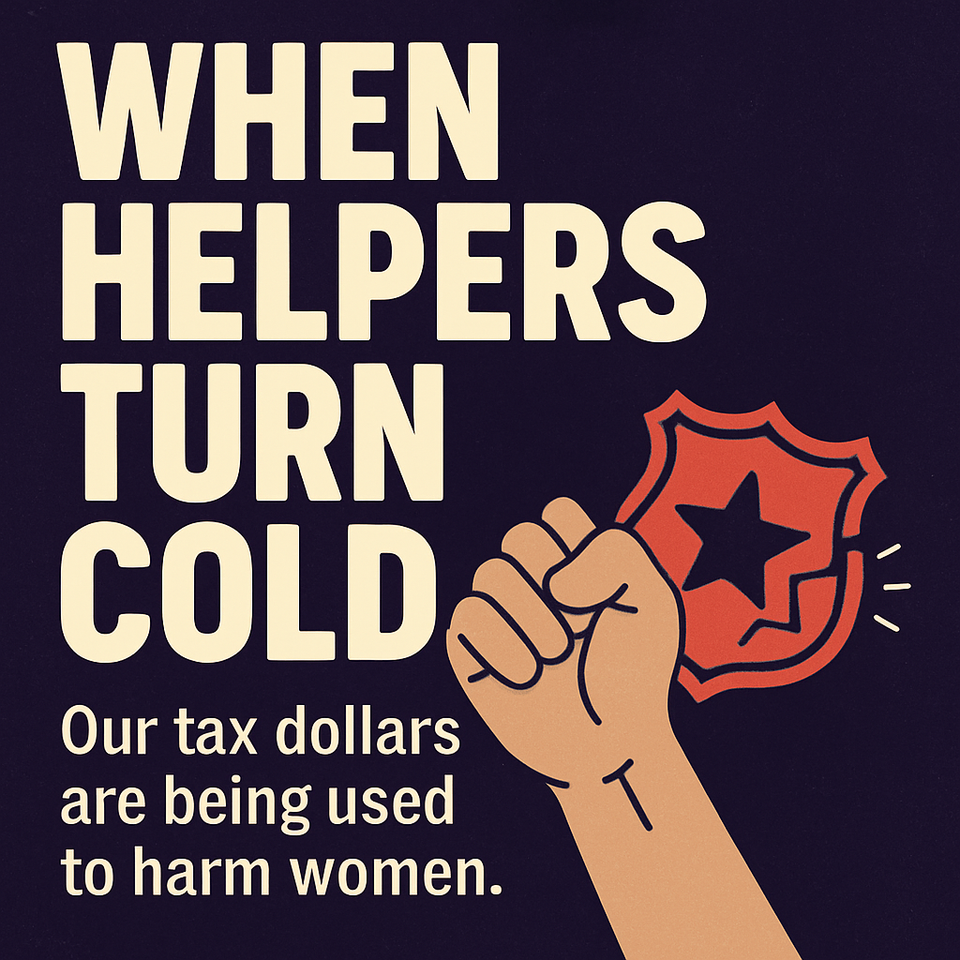
These aren’t isolated failures—they’re part of a pattern in which our tax dollars fund systems that promise protection, but instead abandon and endanger women. Our money is being used to keep abusive systems in place and to perpetuate a cycle of harm. By funding institutions that repeatedly drop victims, we are complicit—unless we demand real change.
This needs to end. Systems must be held accountable for the harm done when they give victims a glimpse of help, then slam the door shut.




Member discussion